Pages

Showing posts with label Roland Chia. Show all posts

Thursday, February 27, 2014

The Christian and Inter-Faith Relations

By Roland Chia [1]
(This article was originally published by Centre for the Development of Christian Ministry of Trinity Theological College, Singapore, in periodical Church & Society, vol. 6, no. 1 [2003], p.1-11.)
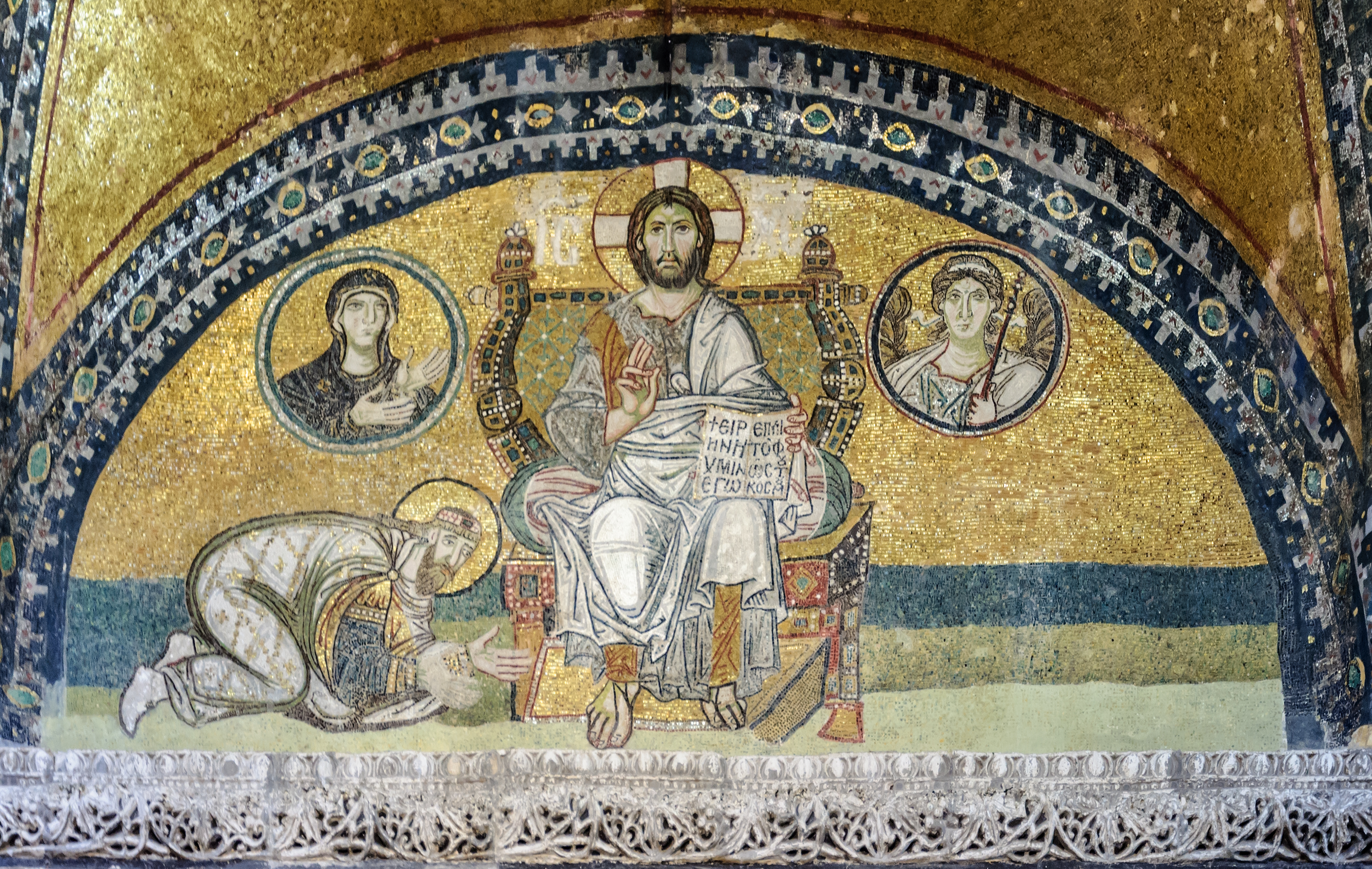
http://upload.wikimedia.org/wikipedia/commons/d/dd/Hagia_Sophia_Imperial_Gate_mosaic_2.jpg
INTRODUCTION 

Early this year, the National Council of Churches of Singapore (NCCS) invited me to write a paper on the theme, ‘The Christian and Inter-Faith Relations’. The purpose of this paper, as I understand it, was to clarify the church’s role in multi-religious and multi-racial Singapore. Broadly speaking, the paper was to serve as a guide that would help pastors and church leaders in Singapore to understand the theological parameters within which the church may reflect on her attitude towards and her relations hip with adherents of different religions. The paper was also to provide the basis for thinking of concrete ways in which the church may work with other faith-communities. The NCCS has since set up a study group comprising of theologians and pastors to deliberate on these matters.

Recent events in the history of the world, and that of our nation have impressed upon us not just the currency of this topic, but also its urgency. The terrorist attack s on America on September 11, 2001, and the wide-ranging implications of America’s war on terror have serious and worrying repercussions in our world. The ripples of those explosive events have reach ed our shores. The arrest of 13 Muslims in Singapore by ISD for suspicion of planning terrorist activities that targeted Americans working in Singapore, and the tudung controversy are two instances. Just when the tension appears to be abating, America announces its intention to take aggressive preemptive measures against Iraq, and is now working strenuously to achieve consensus in the UN for their approach. And late last month, we witnessed a devastating bomb blast at the hitherto peaceful resort-island, Bali.

Friday, June 10, 2011

Religion and the Public Space: Valuable lessons from the Singapore model

By Roland Chia
(This article was originally published in the Straits Times, 10 June 2011, in association with Global Experts, a project of the United Nations Alliance of Civilizations, and reproduced at Trinity Theological College website.)

SINGAPORE more often makes the headlines for its economic performance than for its model of multiculturalism. Nevertheless, Singapore was a true example of a cosmopolitan city before many other regions started to experience diversity. Can the lessons learnt in this part of the world be of use to Europe today?

In February, British Prime Minister David Cameron presented a robust critique of state multiculturalism as it is practised in the West, and particularly in the United Kingdom.

Thursday, July 15, 2010

Different but Equal: Male-female relationship in the Bible

By Roland Chia
(This article originally published in Eagles VantagePoint magazine, issue July-August 2010, and reproduced at VantagePoint website.)


In an article in the 1991 issue of Christianity Today entitled, “Let’s Stop Making Women Presbyters,” evangelical theologian and leader J. I. Packer wrote: “Presbyters are set apart for a role of authoritative pastoral leadership. But this role is for manly men rather than womanly women, according to the creation pattern that redemption restores.” This view, which subordinates the woman to the man, is underscored by the Reformed evangelical preacher John Piper in a book he edited with theologian Wayne Grudem entitled, Recovering Biblical Manhood and Womanhood: A Response to Evangelical Feminism. Piper writes: “At the heart of matured masculinity is a sense of benevolent responsibility to lead, provide for and protect women in ways appropriate to man’s differing relationship.” The converse is also true: “at the heart of mature femininity is a freeing disposition to affirm, receive and nurture strength and leadership from worthy men in ways appropriate to a woman’s differing relationships.”

Wednesday, November 12, 2008

Organ Trading: A Christian Perspective

By Roland Chia
(This article is originally a talk given at the Graduates' Christian Fellowship’s forum on Human Organ Trading held on 12 November 2008 at the GCF-FES Centre, reprinted in Graduates' Christian Fellowship Bulletins, issue December 2008, and reproduced at Graduates' Christian Fellowship website.)


The recent case of two Indonesian men, who were prosecuted for selling their kidneys, has sparked a robust debate on the question of whether Singapore should legalise the sale of human organs. In an article in The Straits Times (21 July 2008), Health Minister Khaw Boon Wan was quoted as saying: "Let’s push within the current regime … but at the same time, let’s not write off an idea just because it sounds radical or controversial … We may be able to find a compromise which is workable and yet does not offend people’s sensibilities."

Tuesday, August 17, 2004

Rendering to Caesar: A Theology of Church-State Relations.

By Roland Chia [1]
(This article is originally published by the Centre for the Development of Christian Ministry of Trinity Theological College, Singapore, in periodical Church and Society, issue 7.2 [2004], p.41-46, and reproduced at Church and Society in Asia Today website.)


In a White Paper entitled Maintenance of Religious Harmony[2], published in 1989 and accepted as a Bill by parliament in 1990, the Singapore Government adumbrates its position concerning religion and politics. Emphasizing that for Singapore, ‘the safeguards for political rights and democratic values must be secular, not religious, institutions’ (21), the White Paper postulates the separation of religion from politics. By this it refers to the prohibition of the promotion of any political party or cause by religious groups or leaders and under the cloak of religion (20). Recognizing the fact that the division between religion and politics is really a matter of ‘convention’ (24), and that any such division in reality is not entirely possible, the White Paper nevertheless insists that such an approach is the most appropriate one, especially in the case of multireligious Singapore. The White Paper also acknowledges the fact that ‘some religions explicitly deny the possibility of this separation, because to their followers the faith encompasses all aspects of life’(25). It concludes, however, that it is precisely because some faiths proffer a holistic view ‘that they must collide if they all attempt to carry out to the full their respective visions of an ideal society’ (25). The document makes clear that ‘the purpose of attempting to separate religion from politics is therefore not to determine the validity of various religious or ethical beliefs which have political or social implications. It is to establish working rules by which many faiths can accept fundamental differences between them, and coexist peacefully in Singapore’ (27).