Pages

Showing posts with label Religious Pluralism. Show all posts

Thursday, February 27, 2014

The Christian and Inter-Faith Relations

By Roland Chia [1]
(This article was originally published by Centre for the Development of Christian Ministry of Trinity Theological College, Singapore, in periodical Church & Society, vol. 6, no. 1 [2003], p.1-11.)
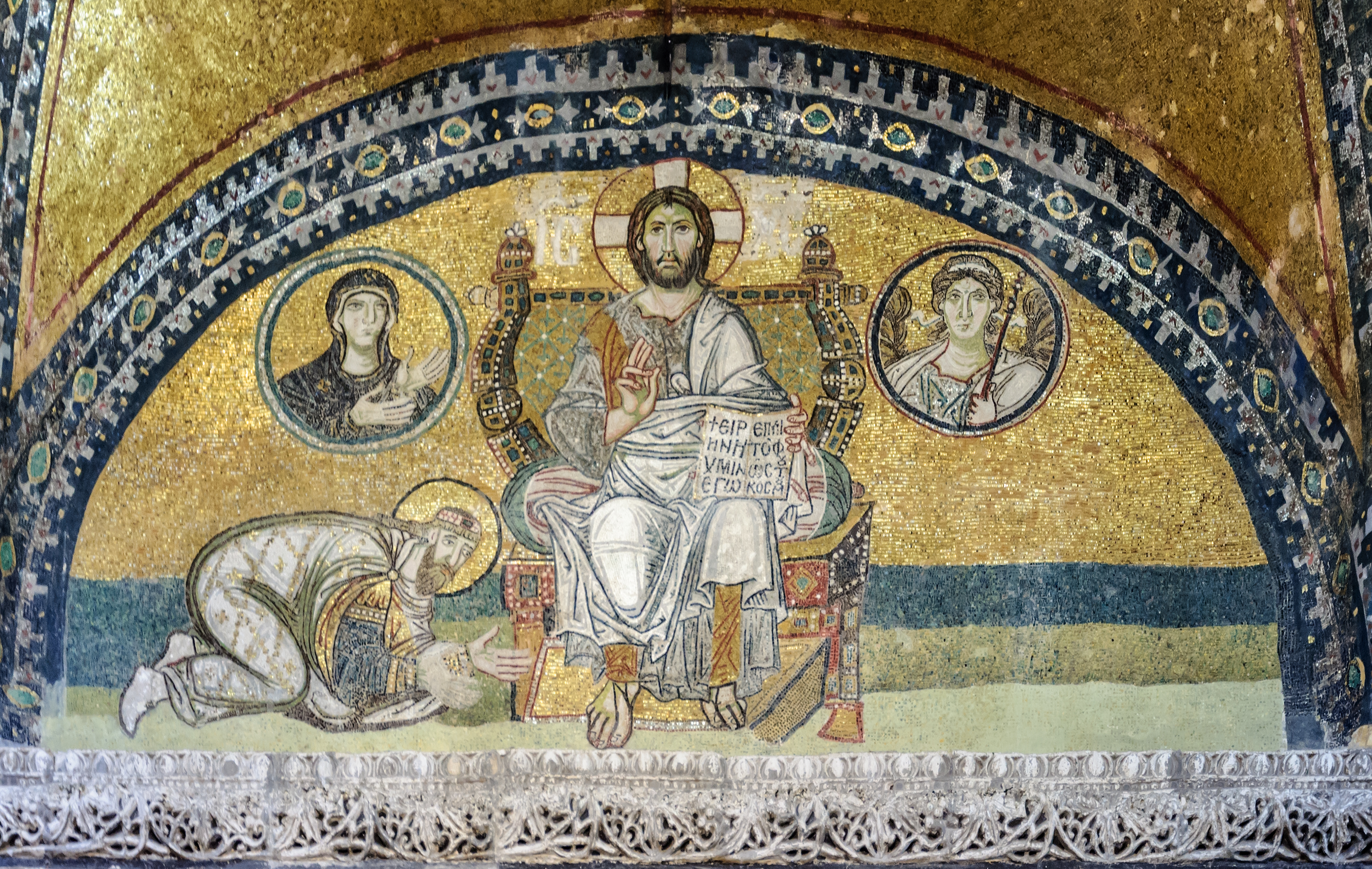
http://upload.wikimedia.org/wikipedia/commons/d/dd/Hagia_Sophia_Imperial_Gate_mosaic_2.jpg
INTRODUCTION 

Early this year, the National Council of Churches of Singapore (NCCS) invited me to write a paper on the theme, ‘The Christian and Inter-Faith Relations’. The purpose of this paper, as I understand it, was to clarify the church’s role in multi-religious and multi-racial Singapore. Broadly speaking, the paper was to serve as a guide that would help pastors and church leaders in Singapore to understand the theological parameters within which the church may reflect on her attitude towards and her relations hip with adherents of different religions. The paper was also to provide the basis for thinking of concrete ways in which the church may work with other faith-communities. The NCCS has since set up a study group comprising of theologians and pastors to deliberate on these matters.

Recent events in the history of the world, and that of our nation have impressed upon us not just the currency of this topic, but also its urgency. The terrorist attack s on America on September 11, 2001, and the wide-ranging implications of America’s war on terror have serious and worrying repercussions in our world. The ripples of those explosive events have reach ed our shores. The arrest of 13 Muslims in Singapore by ISD for suspicion of planning terrorist activities that targeted Americans working in Singapore, and the tudung controversy are two instances. Just when the tension appears to be abating, America announces its intention to take aggressive preemptive measures against Iraq, and is now working strenuously to achieve consensus in the UN for their approach. And late last month, we witnessed a devastating bomb blast at the hitherto peaceful resort-island, Bali.

Monday, August 16, 2010

Can Christians Belong to More than One Religious Tradition?

By Tan Kang San
(This article originally published in The Whole Gospel, The Whole Church, The Whole World: A three year project of The Lausanne Theology Working Group, volume 3 [UK: Paternoster in collaboration with The World Evangelical Alliance Theological Commission, 2010], and reproduced at Lausanne website.)


I. Perspectives on Non-Christian Religions
This paper seeks to explore the notion of multi-religious belonging and evaluate whether it is theologically possible for a Christian to follow Christ while retaining some form of identification with one’s previous religion such as Islam, Hinduism, Buddhism or Chinese religions. Instead of a total rejection of past faiths, is it possible for a Christian, without falling into syncretism, to belong to more than one religious tradition?

Friday, April 24, 1998

Conversion and Intrafamilial Conflict: Some New Testament Perspectives

By Tan Kim Huat
(This article is originally published by the Centre for the Development of Christian Ministry of Trinity Theological College, Singapore, in periodical Church and Society, issue 1.1 [1998], pp.7-11, and reproduced at Church and Society in Asia Today website.)


Christianity as an avowedly missionary religion seeks converts. To prevent Christianity from performing missionary work is tantamount to denaturing it. This may sound offensive to some but when it is borne in mind that such a characteristic is not unique to it, the offence is somewhat lessened. Many religions do have such an agenda, especially when they claim to have the Truth and the principles to bring about the greatest happiness to a human being. Hence, Christianity, like some other religions, understands itself as helping to bring about something eternally significant and blissful to someone when it invites him to be converted. However, when this happens, there often comes with it a potentially thorny problem: intrafamilial conflicts brought about precisely by conversion. Such conflicts are often most complex, exasperating and traumatic. A new convert, especially a young one, may find it rather difficult to cope with these. The questions he may need answering could well be those which are Biblical, theological or practical in nature. It is the purpose of this article to look at this problem from some perspectives provided by the New Testament (NT) and it is hoped that some strategies may be found for pastors to alleviate the pain brought about by such conflicts [1]. By so doing, it also hopes modestly to demonstrate the importance of drawing resources from theology (and Biblical studies) to address societal norms, trends and concerns.